Why Security No Longer Stops at the Office Door
The way we think about cybersecurity has changed far beyond the office walls. Over the past few years, remote work, supply chain exposure, and growing national level threats have shown that security is no longer confined to one network, one team, or one location. It now depends on people, partners, and resilience across the entire digital ecosystem.
July 10, 2026 · 6 min read
Remote Work, Remote Risks: The Death of the Traditional Perimeter.
In 2020, the walls of our offices truly disappeared. As the pandemic forced Indonesia into Large-Scale Social Restrictions (PSBB), millions of employees suddenly found themselves working from dining tables, living rooms, and bedrooms. Spentera witnessed a major shift: traditional security was no longer enough. Cybersecurity had become everyone’s responsibility at home.
The birth of Hacktrace during the pandemic sends a message that when the world was forced to learn digitally, your company came with Training & SME solutions. In response to the urgent need for broader education and support, our First Subsidiary Hacktrace was officially established in 2020. With a dedicated focus on SMEs and cybersecurity training, it was built on a simple belief: in the era of remote work, giving people cybersecurity skills is one of the smartest ways to strengthen resilience. This shows your group’s adaptability to rapidly changing market needs.
That was when we learned the traditional perimeter is dead. Zero Trust and cybersecurity education are no longer optional; they are essential.
2020 taught us that security is no longer about protecting office buildings or corporate networks. It is about protecting identities and people, wherever they are.
You Are Only as Strong as Your Weakest Link.
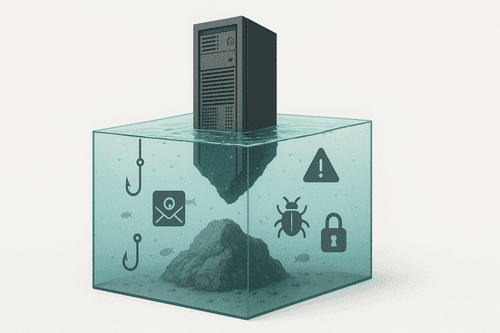
2021 reminded us that cyber threats don’t always come through the front door. Sometimes, they enter through the trusted vendors standing at the back. The SolarWinds incident sent shockwaves across industries, including those in Indonesia. It showed that even when a company’s internal systems are well protected, serious risks still remain if its technology partners or software vendors have vulnerabilities of their own.
This moment also marked an important milestone in our journey. As part of our commitment to more comprehensively protecting our client’s digital ecosystems, our Second Subsidiary Dwarapala was officially established in 2021. Its mission is clear: to strengthen Defensive Security and Compliance, ensuring that every link in a business ecosystem is protected against third-party risks.
Since 2021, through Dwarapala, we have helped clients conduct comprehensive security assessments not only within their own companies but also across their external ecosystems, ensuring that every part of the supply chain meets the same rigorous security standards.
That was when we learned that you are only as strong as the weakest link in your ecosystem. Cybersecurity is no longer just about defending your own company. It is about managing third-party risk. Never assume your vendors are secure simply because they are trusted.
Cybersecurity Is the New Front Line of National Defense.
By 2022, the line between digital conflict and physical reality had become much harder to see. Around the world, geopolitical tensions were increasingly followed by cyberattacks on critical infrastructure. Many of these events served as a powerful reminder that data is not just a business asset; it is also a matter of national autonomy. Cyberattacks have become tools of political pressure, public influence, and strategic disruption.
Cyberspace is now the new front line of both national and corporate defense.
Cybersecurity is no longer confined to IT departments and server rooms. It now belongs in boardrooms, government institutions, and everyday conversations. If we fail to protect our data autonomy, we leave our defenses dangerously exposed. That is why cybersecurity is fundamentally about resilience. The question is no longer whether an attack will happen, but how prepared we are to protect national integrity, maintain business continuity, and preserve public trust when it does.
Taken together, these three years tell a single connected story. In 2020, the perimeter disappeared. In 2021, the supply chain became the weak point. In 2022, cybersecurity became a matter of national defense. The lesson is clear: cybersecurity is not just about technology. It’s about people, partnerships, and preparedness. Companies that understand this shift will be better positioned to protect trust, maintain continuity, and adapt to whatever comes next.