Beyond Checkbox Compliance: Why AASE is Indonesia’s New Benchmark for Cyber Resilience
Indonesia's digital economy is projected to reach nearly USD 100 billion by 2025, according to the e-Conomy SEA 2025 report from Google, Temasek, and Bain & Company. As BSSN disclosed through the Kantor Staf Presiden (KSP) in mid-2026, cyber anomalies rose 714% in 2025 to 5.5 billion, a surge that gives existing testing obligations far more weight.
November 17, 2026 · 6 min read
For the financial sector, the shift from passive compliance to active defense validation started before this surge. Since December 2022, the Financial Services Authority (OJK) has required commercial banks, through SEOJK Siber No. 29/SEOJK.03/2022, to conduct regular cybersecurity testing. Beyond vulnerability-based testing such as penetration testing, the regulation lists scenario-based testing, and one of its forms is the Adversarial Attack Simulation Exercise (AASE).
But what exactly is AASE, and why does it matter beyond meeting the regulation?
Understanding AASE: Moving Beyond VAPT
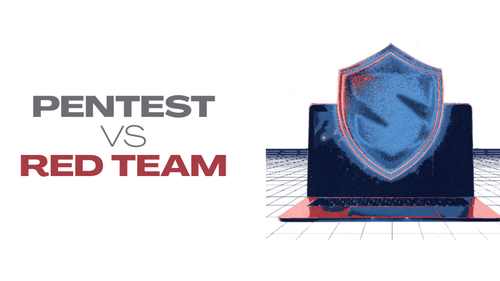
While Vulnerability Assessment and Penetration Testing (VAPT) focuses on identifying as many technical flaws as possible, it is not designed to measure how well your company can detect and respond to a live, coordinated attack.
AASE bridges this gap. Operationalized through sophisticated Red Team engagements, AASE actively emulates real-world adversaries. It mimics the Tactics, Techniques, and Procedures (TTPs) of Advanced Persistent Threats (APTs) using frameworks like MITRE ATT&CK.
Crucially, SEOJK describes AASE as a test that targets the people, processes, and technology supporting a bank’s critical functions. In practice, that means testing:
- Technological Protection: Can your active defense tools (like EDR and SIEM) block advanced threats?
- Human Readiness: How fast and effectively can your Blue Team or Security Operations Center (SOC) detect and respond to an ongoing attack?
- Process Resilience: Do your escalation, decision-making, and communication procedures hold up while an attack is in progress?
When it is included in scope, an AASE engagement can also extend to Physical Security: are your physical assets and data centers adequately protected against unauthorized access?
Four Ladder of Cyber Drill Simulation, Each Built for a Different Goal
One practical approach is to treat these exercises as a ladder, with AASE at the top. Starting with lighter ones lets your team practice before the full simulation, and each stage tests a wider part of the company:
- Social Engineering Exercise (such as a Phishing Simulation): Tests whether employees recognize and report deceptive emails.
- Tabletop Exercise: Executives, legal, and IT walk through an incident scenario to test who decides, who reports, and when.
- Cyber Drill: Hands-on practice in a simulated environment, where your security team detects and contains attacks without risking production systems.
- AASE: The full adversarial simulation described above, covering people, processes, and technology, plus physical security when it is in scope.
For commercial banks, SEOJK Siber No. 29/SEOJK.03/2022 requires scenario-based testing, and these four exercises are among the methods it lists. The circular lists them without ranking them, so the ladder above is a practical progression rather than a regulatory requirement.
How to Strategically Implement AASE
Executing an adversarial simulation in a live production environment requires unmatched discipline. When selecting an AASE provider, business leaders must demand verified technical competence and proven domestic credentials.
Spentera delivers an enterprise grade AASE solution built specifically for mission critical environments:
- Elite Capabilities: Their offensive defense analysts hold highly respected global certifications, including OSCP+, OSWE, OSCE, and OSEE.
- Regulatory Alignment: Spentera is legally registered with BSSN and the Indonesian Payment System Association (ASPI), and holds international CREST Global accreditation, ensuring strict adherence to industry standards.
- Proven Experience: With more than 15 years of experience, Spentera has worked across Indonesia's most demanding sectors, from major banks and fintech platforms to critical infrastructure, earning the trust needed to understand the domestic threat landscape inside and out.
Cybersecurity is no longer just an IT cost; it is critical risk management. Regulators and attackers demand proven resilience, not theoretical checklists. Integrating an Adversarial Attack Simulation Exercise into your annual strategy ensures your team responds to real crises with battle tested precision.
Contact Spentera today to schedule an executive briefing and fortify your enterprise against modern cyber threats.